
Most conversations about rugs for a private villa start with a single room. A designer wants a custom piece for the living room, or the homeowner has seen a medallion they like and wants it reproduced for the entrance hall. That is a reasonable starting point, but it is not actually how the planning should work.
A villa is not one rug problem. It is several, each with different functional requirements, different traffic levels, different pile-height priorities, and different relationships to the furniture and architecture around it. When those decisions are made room by room, in isolation, the results rarely feel as considered as the rest of the interior. Sizing that is slightly off in one room reads differently once you can compare it to well-proportioned rooms elsewhere in the house. Pile heights that were chosen independently end up inconsistent underfoot. Colourways that were developed separately start to compete rather than coordinate.
The planning advantage of a whole-house rug brief is that all of those decisions are made together, with a single point of view across the project. This article is about how to put that brief together, room by room, before the first production conversation begins.
Why Residential Villa Planning Is Different from a Single Commercial Rug
When an architect or procurement team specifies a single custom rug for a hotel lobby, the brief is contained: one space, one function, one set of dimensions, one approval process. A villa is the opposite of that. It is a collection of spaces, each with a different function and a different relationship to the people using it, and the design problem is to make custom pieces for all of them feel like they came from the same considered place.
The practical differences that matter:
- Multiple spaces, multiple design briefs. A living room, a dining room, three or four bedrooms, a home office, perhaps an entry hall, a majlis, a covered terrace — each has a different traffic pattern, a different mood, and a different relationship to furniture. The pile height that makes sense for a bedroom is not the same as the pile height that makes sense for a dining room with chairs being moved at every meal.
- Colour and construction consistency across rooms. In a well-designed private home, the rugs in adjacent or related spaces should feel coordinated even if they are different designs. That coordination is easier to plan when all the briefs are visible at once rather than executed one at a time over months.
- One point of contact for the whole project. For a single commercial rug, a fragmented sourcing process (design from one supplier, production from another, shipping from a third) is manageable because there is only one piece to track. Across a full villa, it is not. A dedicated point of contact who holds the full brief, manages the physical sample process for every piece, and coordinates production and delivery timelines across the whole project is not a luxury for a multi-room order — it is a requirement.
- International delivery planning. Many private villa projects are cross-border: a residence being furnished in the Gulf, Europe, or Southeast Asia with rugs sourced from India. Shipping, customs documentation, and in some cases duties-paid (DDP) delivery arrangements need to be part of the planning from day one. A lead time that works for domestic delivery may not work for an international project once transit and customs clearance are added.
"The planning advantage of a whole-house brief is that sizing, pile height and colourway decisions are made in relation to each other — not independently, room by room, over several months."

Sizing Room by Room
Rug sizing is the most common source of regret in residential projects, because the proportional relationship between a rug and the furniture around it is not always obvious from a floor plan. A rug that looks generously sized on paper can feel small once the furniture is in place, because what matters is not the rug's absolute dimensions but how it relates to the seating group, the dining table, or the bed it is anchoring.
Anchor the whole seating group
The rug should extend far enough past the furniture legs that the seating arrangement sits on it rather than floating around it. At minimum, all front legs on the rug; ideally all four legs of every piece. A rug that only catches the coffee table reads as too small regardless of its actual dimensions.
Chairs on the rug when pulled out
The dining table measurement alone is not enough. Add the chair depth on all four sides, with the chairs pulled back as they would be during a meal. A rug that seats people at the table but leaves them stepping off it when they pull their chair back is a rug that was sized to the table, not the function.
Extends past both sides and the foot
Standard approach is full coverage: the rug runs under the bed and extends enough on both sides and the foot that bare feet hit rug, not floor. The alternative is runners on either side of the bed, which works well architecturally in rooms where the bed is a strong visual centrepiece and the sides are long.
Match the architecture, not the furniture
Entry halls are often the only room where the rug is read in isolation rather than in relation to surrounding furniture. Proportion here is architectural: the rug should feel intentional in the space, not like it ran out of room. Round or oval pieces work well in circular foyers and domed entry halls — hand-tufted construction can accommodate those shapes where off-the-shelf rugs cannot.
Custom shapes — round, oval, irregular — are one of the practical advantages of a hand-tufted production process over stock rugs. Any shape that can be sketched can be produced. Villas with curved staircases, round dining rooms, or architectural alcoves often have spaces that a rectangular rug cannot serve properly. Those shapes add no complexity to the brief; they simply need to be specified from the start.
Choosing Pile Height by Room
Pile height affects both the tactile quality of a rug underfoot and how it performs over time under different levels of use. The choice by room is primarily a function of two things: how much foot traffic the space carries, and whether comfort or durability is the design priority.
| Room / Space | Recommended pile | Reason |
|---|---|---|
| Master bedroom, guest bedrooms | Higher pile / plush | Low traffic, comfort-first — the underfoot feel is the priority; wear rate is low |
| Formal living room / majlis | Higher pile or medium | Low-to-moderate traffic, visual and tactile quality matters — can support a luxurious pile without rapid wear |
| Family living room / family lounge | Medium pile | Higher traffic than formal rooms, children and daily use — balance comfort with durability |
| Dining room | Lower pile / denser | Chairs moving repeatedly; food and drink spills common — a flatter, denser surface cleans more easily and shows less wear from chair legs |
| Entry hall / foyer | Lower pile / denser | First and last contact point for foot traffic across the whole house — durability is the priority |
| Home office / study | Lower to medium pile | Chair castors and sustained desk use compress higher pile faster — a flatter pile holds up better and is easier to roll a chair across |
The trade-off to name honestly: higher pile looks and feels more luxurious and is the obvious instinct for a premium private residence. In the rooms above where a lower pile is recommended, that is not a compromise on quality — it is the right choice for the function of the space. A high-pile rug in a dining room or entry hall will show wear and flattening faster than the same rug in a bedroom, regardless of the quality of the construction.
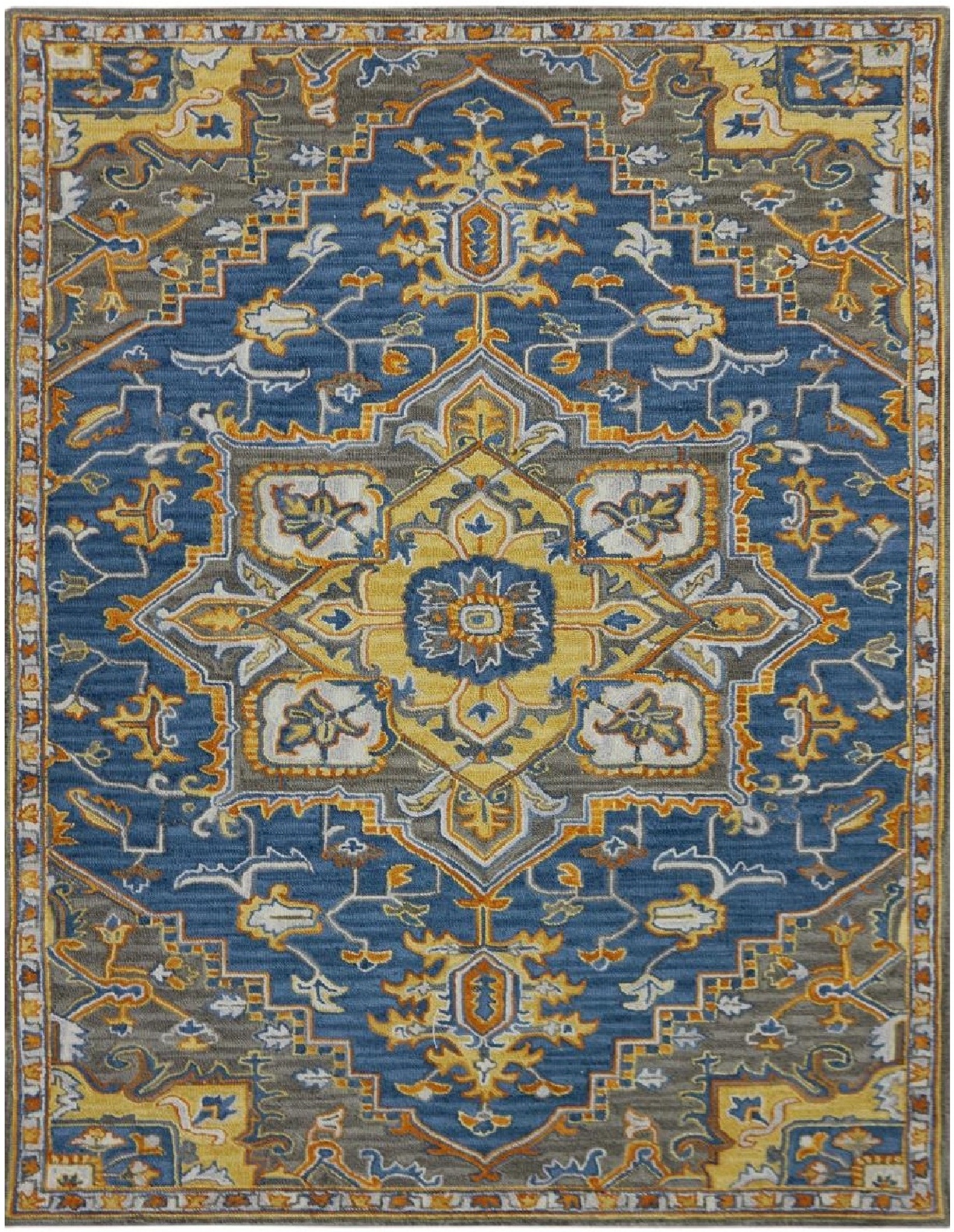
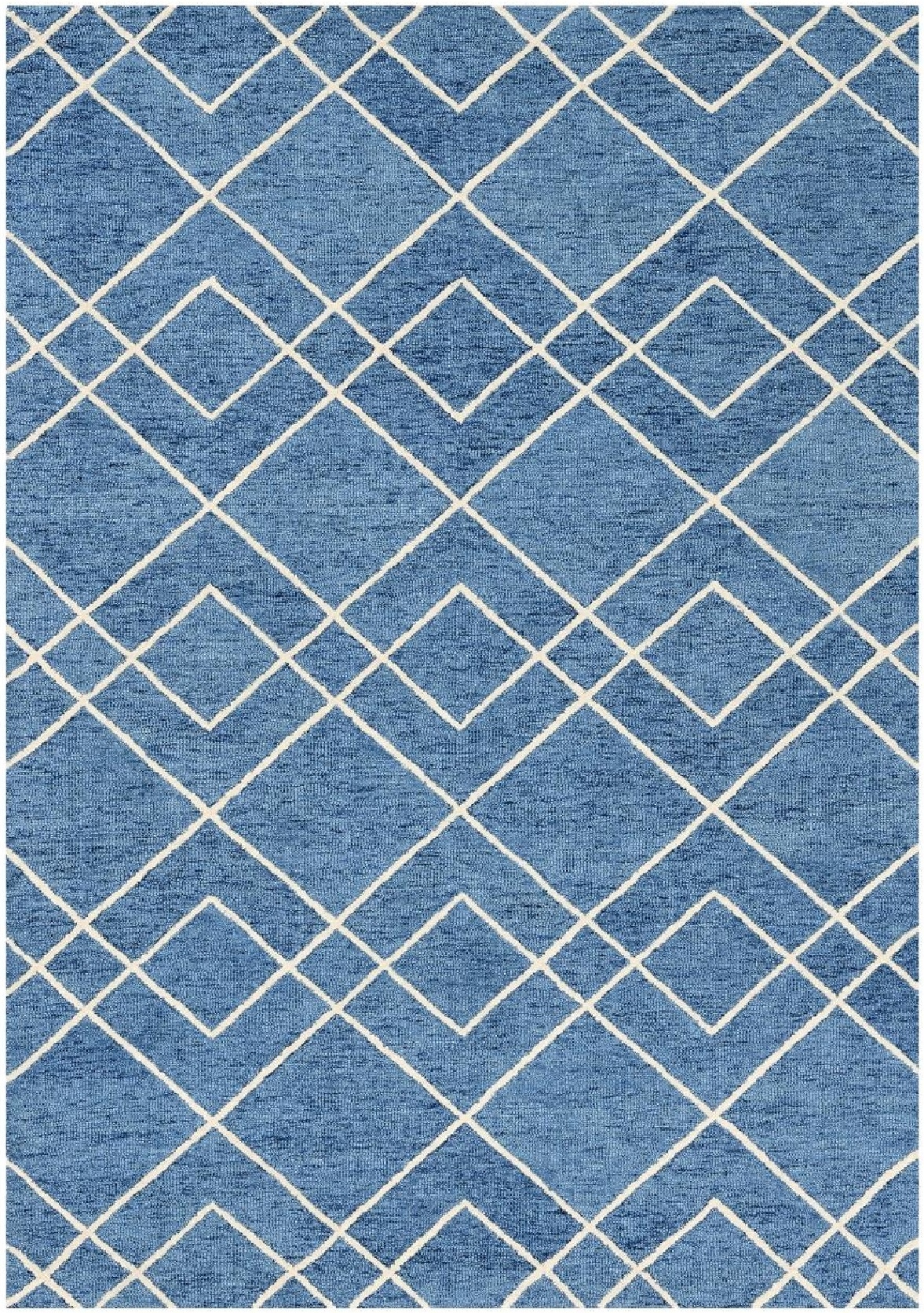
Materials: Wool Blend, Viscose, and Silk Highlights
The pile material choice is a quality and durability decision, not just an aesthetic one. In a private residence with a mix of spaces and traffic levels, the right material is often different by room, even within the same commission.
Wool and wool-blend: the practical default
For most rooms in a villa, a wool or wool-blend pile is the right specification. Wool has natural resilience, which means it recovers pile height after compression better than most synthetic alternatives. It resists staining to a useful degree due to its natural lanolin content. It takes dye well, giving the depth of colour that makes a custom rug read as considered rather than production-line. And it performs well in the Indian subcontinent's climate, where natural moisture management matters. For all the rooms where durability and longevity matter as much as appearance, wool is the honest default.
Viscose: sheen and softness, with honest limits
Viscose pile (sometimes sold as art silk or bamboo silk) reflects light intensely and gives a rug a visual richness that wool does not. In a formal living room or master bedroom where the rug is not under heavy daily foot traffic, a viscose element can contribute significantly to the look of the piece. The honest limitation: viscose is a fragile fibre. It shows foot traffic, moisture damage, and wear faster than wool, and it does not respond well to standard rug cleaning methods. Full-field viscose in a high-traffic location is a mistake that becomes visible within 18 months. As a percentage element in a wool-dominant blend, used to highlight specific design elements, it is a considered choice.
Silk highlights: for detail work, not field construction
Silk pile is used in premium custom rugs to add a fine, reflective accent to specific elements of the design — a border detail, the centre of a medallion, a pattern element that the designer wants to read differently under light. As a full-field pile material it is both prohibitively expensive for most residential projects and too fragile for any space with regular foot traffic. As a deliberate accent in a predominantly wool construction, it is a tool worth knowing about for the right brief.
Realistic Lead Times
The timeline for a custom hand-tufted rug across a full villa is longer than most first-time buyers expect, and the reasons are worth understanding clearly so that the project plan accounts for them from the start.
A single custom rug follows this sequence: brief and artwork development, design approval, physical sample production, sample review and sign-off, full production, quality inspection, and delivery. Each of those steps takes time, and none of them can be meaningfully compressed without accepting some risk elsewhere in the process.
The physical sample step is not optional. The Anchorline position on this is stated clearly on the site and it applies equally to residential projects as it does to commercial ones: we do not ask for final sign-off on a screen render. A tufted swatch in the actual yarn colours is produced before full production begins. Colours in wool look different in person than they do on a calibrated design screen, and the difference matters more in a private home — where the rug will be seen daily under natural light — than almost anywhere else. The sample step adds time upfront; it prevents a far more costly full-size mistake downstream.
Multi-room projects run in phases rather than all at once. A villa with rugs across six or eight rooms cannot have all of them produced simultaneously from a single brief. Sample approvals happen at different points, some designs are resolved earlier than others, and production timelines stagger accordingly. The full-project lead time is longer than the lead time for any individual piece.
For international delivery, add transit time and customs clearance to the production lead time. For destinations where a DDP (delivered duty paid) arrangement is possible, that simplifies the buyer's side of the process significantly — Anchorline handles the documentation and the landed cost is confirmed upfront. For other destinations, import duties and customs procedures need to be factored into the timeline and budget from day one.
Note on lead times: We do not publish a fixed week-range here because it varies meaningfully by project scale, design complexity, and current production schedule. When you share your brief, we will confirm a realistic production timeline for your specific project before any commitment is made.
What to Have Ready Before Your First Conversation
A villa brief does not need to be fully resolved before you reach out — that is part of what the first conversation is for. But having the following ready will make that conversation more productive and the first response more useful.
- A room-by-room floor plan, even a rough one. It does not need to be an architectural drawing. A sketch with approximate dimensions gives enough information to discuss sizing in relation to the furniture layout of each room.
- Approximate square footage per room, not just total house area. "The villa is 800 square metres" does not tell us what we need to know. The rug area in each room depends on furniture placement and the proportion of the room covered, which is different from the room area.
- Any existing colour palette, mood board, or FF&E reference. If the interior is already specified or underway, a reference to that palette or scheme helps orient the rug designs from the start rather than developing them independently and reconciling later.
- Reference images for any room where you have a clear direction. A photograph of a rug or interior you like is more useful than a written description of what you want. It does not need to be the exact design — it just needs to communicate the mood, scale, or level of pattern complexity you are aiming for.
- Delivery address and whether it is domestic or international. This affects lead time planning from day one. An international destination changes the project timeline and may affect how we structure production phasing and documentation.
Custom rugs for whole-house briefs.
Anchorline handles custom hand-tufted and hand-knotted rug commissions for private villas and residences, domestic and international. We work from your floor plan or a reference image, through physical sample approval for every piece, to delivery at your project address.
For multi-room briefs, a single point of contact holds the full project from first brief to final delivery. We do not begin production on any piece without a physical sample approval. Lead time is confirmed before commitment, not assumed.
- Any room size, any shape
- Custom colourway per room or coordinated across the house
- Wool, wool-viscose blend, silk highlights
- Physical sample before production — always
- International export with documentation
- DDP delivery arrangements available
Also relevant: Hand-Tufted Rugs: How Custom Lobby and Signature Rugs Actually Get Made for detail on the production process and construction, and the Bespoke & Custom section on our homepage for an overview of the white glove service.